Point of View
A running blog of what it takes to create multidimensional impact. Strategy, growth, leadership, culture, and beyond. Explored through lessons drawn from practice, and written for people building organizations that aim to perform well and matter more.
Why impact, not growth, is the point.
IMPACT IS THE POINT
10/18/20254 min read
Why companies that measure success by impact, not growth, build what lasts.
I’ve spent enough time around ambitious companies to see a pattern. It’s strangely a paradox: every company I’ve seen grow the fastest also risks losing the reason why it mattered in the first place. Somewhere between Series C and the quarterly review (or between customer obsession as a founding value to introducing ads in paid-for Prime Video; looking at you, Amazon), growth becomes the point. But the ones that endure, and inspire, have something else in common: their impact compounds faster than their valuation.
The moment growth becomes the story, impact quietly leaves the room.
We start out wanting to build something that matters. A new way of solving a problem, a team that feels alive, a company people would miss if it disappeared. But somewhere along the way, growth takes over. The charts go up, and down. The dashboards glow green, red, and yellow, brighter than a Christmas tree. And yet, something essential gets lost: the reason we were growing in the first place.
Nobody remembers a company for its quarterly earnings, unless you sit in the CEO’s chair or tally shareholder reports for a living. We remember them for their impact. On the markets they reshaped, the teams they built, the communities they served, and the possibilities they left behind.
Growth is a result. Impact is the point.


The Shift In What Matters
For years, business success was defined by performance and profit. Now, the definition is changing. The 2025 Edelman Trust Barometer found that, while widespread grievance is eroding people’s trust across the board, business is surprisingly the most trusted institution globally. More than governments, NGOs, or media. But that trust is conditional: people expect leaders to act on challenges beyond their balance sheets.
That’s not idealism; it’s pragmatism. Purpose-driven companies innovate faster, attract better talent, and outperform peers over the long term. The data keeps telling us what instinct already knows: profit alone isn’t enough.
The world is asking a harder question of leaders. Not how fast you grow, but what your growth leaves behind.
Three Dimensions Of Impact
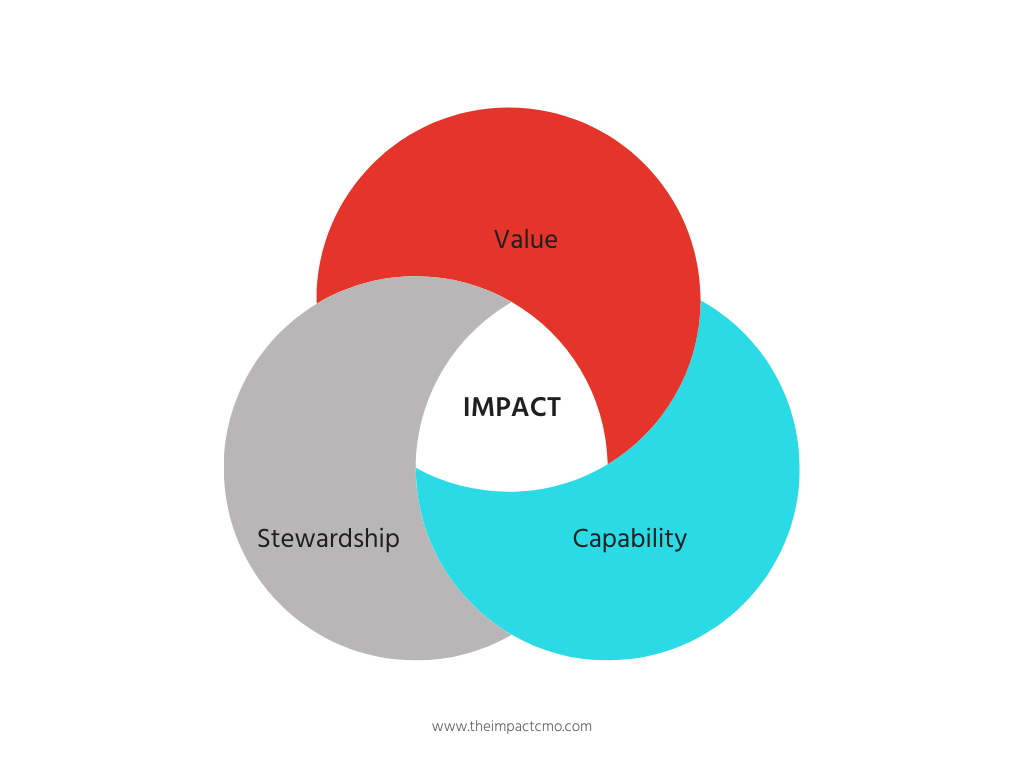
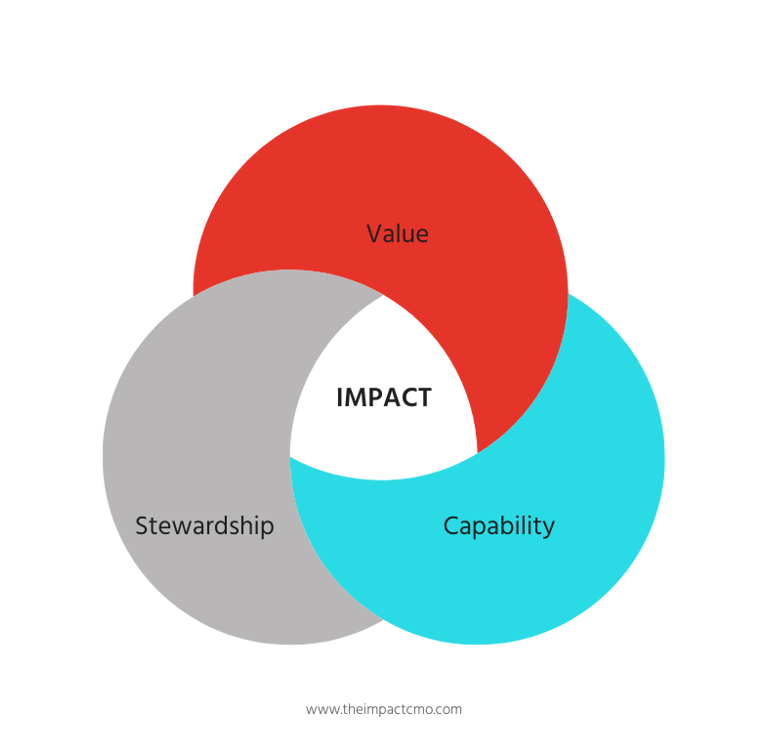
After years of chasing metrics, I’ve come to believe that impact compounds only when it’s focused. For me, there are three kinds that matter most:
Value.
This is the value your product or service creates in the world, as well as the behavior(s) it influences. It’s strategy that outlasts the quarter: clear positioning, real differentiation, disciplined execution. It is evident in customer outcomes, market shifts, and durable economic trends. When done well, it compounds.
Capability.
This is the capability you build in people: skills, trust, autonomy, judgment. Leadership isn’t what you say at an offsite; it’s what your team can do when you’re not in the room. Organizations that make people better win. People-centered performance systems correlate with higher revenue growth and lower attrition.
Stewardship.
This is your net effect on society and the planet. It’s how you handle externalities, where you lean into public problems, and whether you create more possibilities than you consume. Some may call it virtue signaling; it’s anything but. It’s about alignment: when your core business model and your social footprint stop fighting each other, strategically designed impact initiatives (those tied to the business, not bolted on) can strengthen competitiveness.
Each dimension feeds the next. Value creates momentum. Capability sustains it. Stewardship legitimizes it. Together, these form the architecture of impact and what I think of as the real value creation system: are we creating value that endures, capability that outlasts leaders, and stewardship that sustains? If not, growth is an illusion.
It’s tempting to talk about impact as a story, a campaign, or a line in an ESG report. But real impact is an operating system, one that demands hard choices.
It asks us to focus ruthlessly: which customers will we serve, and which distractions will we ignore?
It asks us to make outcomes the scoreboard: revenue - yes, but also the problems solved, the risks removed, and the changes that truly matter.
It asks us to build capability, not dependency. To design systems that make others better, rather than relying on heroes to save the quarter.
And it asks us to practice stewardship: to price in externalities, to understand the ripple effects of what we build, and to measure success by the possibilities we leave behind.
Impact is structural. It is strategy. And it will make your business stronger for it.


The Discipline Of Impact
Guardrails Against The Theater
We’ve all seen “purpose” drift into performance theater: big talk, glossy decks, and little substance. We have grown cynical about it. But there is a simple fix: it’s discipline.
Act where you have legitimacy.
Tie impact to economics.
Measure it like any other investment.
Done this way, impact does not compete with profit; it creates it.
What Endures
Every company, at some point, faces the same question: when the numbers fade, what will remain?
Markets are crowded. Talent is choosy. Societal expectations are rising. The companies that earn trust and shape markets are building systems that make better things possible. For shareholders, yes, but also for customers, teams, and society.
Value. Capability. Stewardship. That is your Value Creation System.
Numbers fade. Impact lasts. Make that the point.
Ready to Make an Impact?
Reading is a start. Acting on it is better. If these ideas resonate, let’s turn them into something real for your team, your business, or your next chapter. Let's not just think differently, but build differently.


Stay in the Loop
© 2025 The Impact CMO. All rights reserved.