Point of View
A running blog of what it takes to create multidimensional impact. Strategy, growth, leadership, culture, and beyond. Explored through lessons drawn from practice, and written for people building organizations that aim to perform well and matter more.
You Should Have Your Cake And Eat It Too
IMPACT FOR GOOD
1/16/20267 min read


Doing good while doing well.
We’ve long been told to choose.
Make the target or make a difference.
Win the quarter or do what’s right.
But that choice was always false.
The companies that endure don’t trade one for the other; they build so the two feed each other.
They accept a little friction now to make the long term possible and build enduring strength.
They understand that trust, meaning, and usefulness aren’t side effects of performance.
They are performance, measured on a longer clock.
That’s what Stewardship means:
The discipline of doing good while doing well.
We’ve long been told to choose.
Make the target or make a difference.
Win the quarter or do what’s right.
But that choice was always false.
The companies that endure don’t trade one for the other; they build so the two feed each other.
They accept a little friction now to make the long term possible and build enduring strength.
They understand that trust, meaning, and usefulness aren’t side effects of performance.
They are performance, measured on a longer clock.
That’s what Stewardship means:
The discipline of doing good while doing well.
For decades, business was told that purpose and profit pulled in opposite directions.
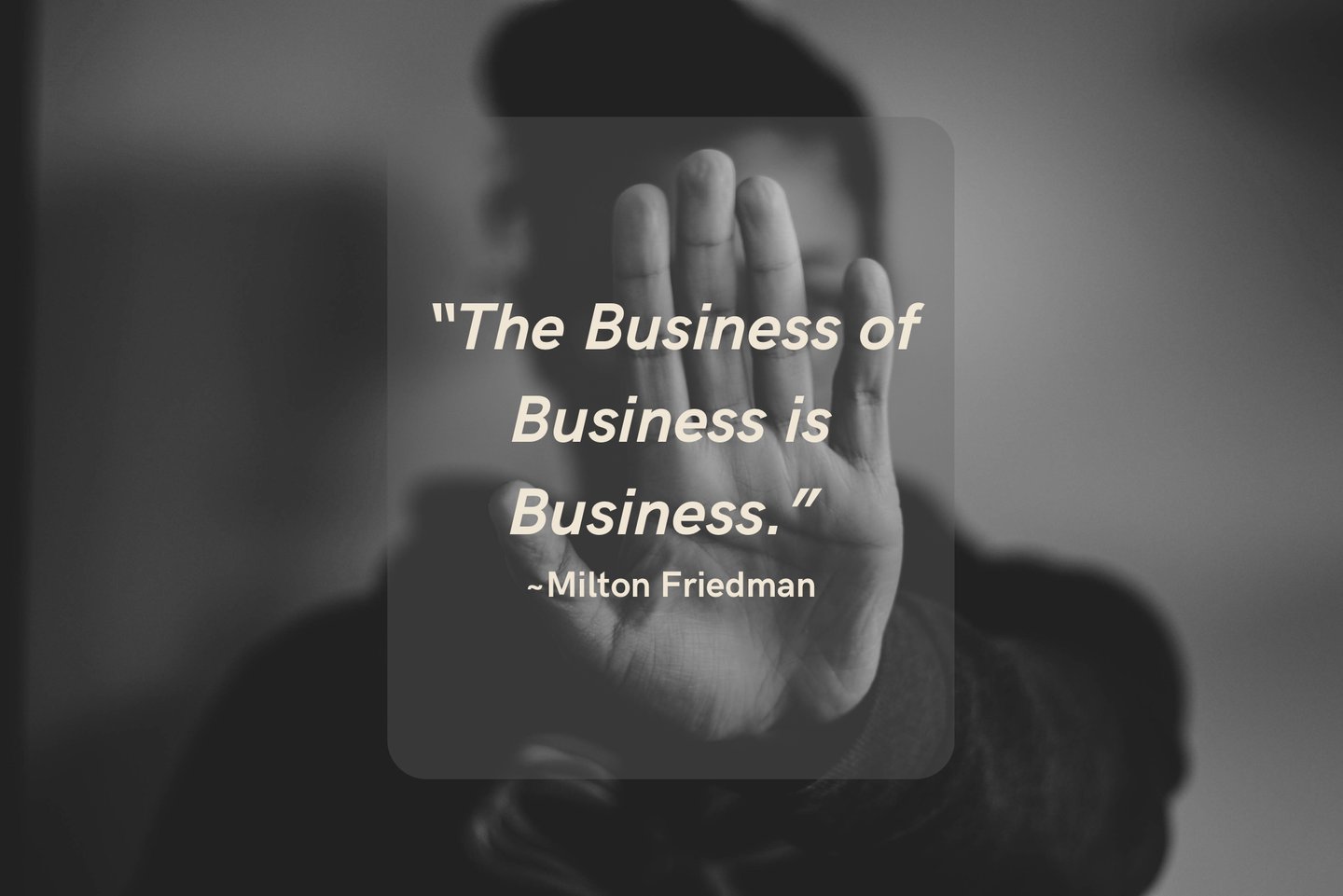
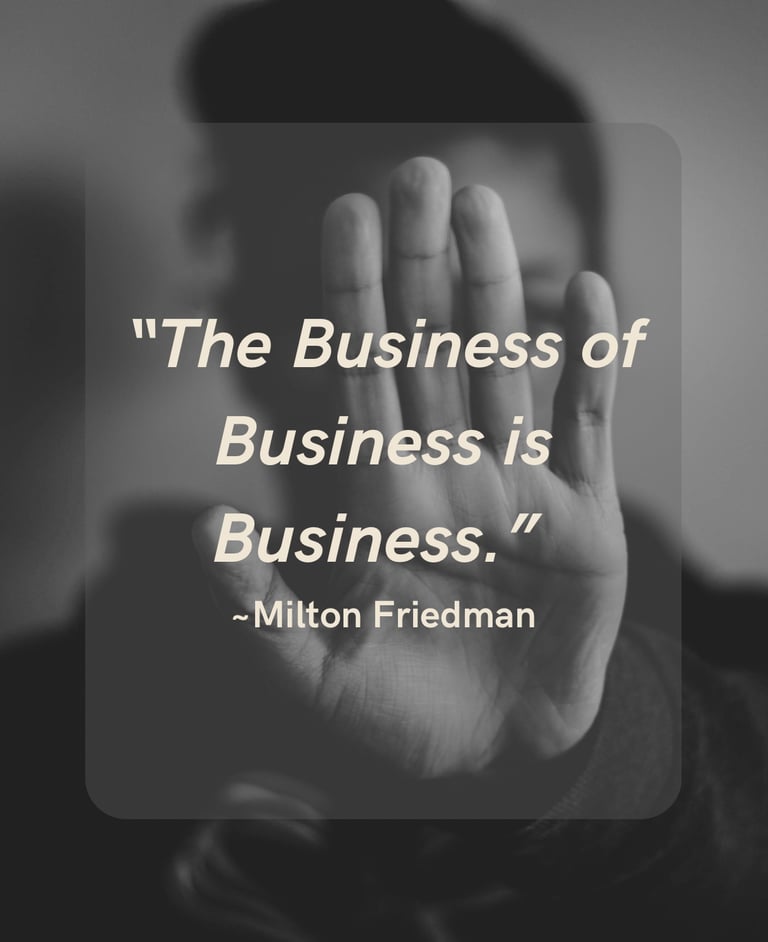
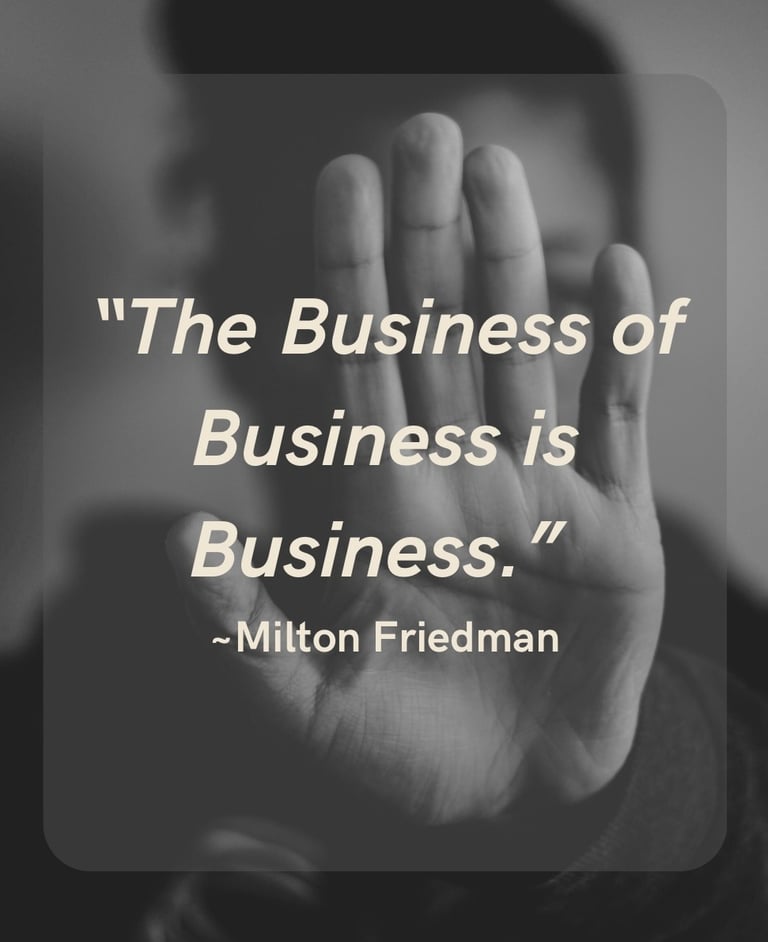
Milton Friedman drew a hard line: the business of business is business. Everything else – be it people, planet, or community – lived in the margins of philanthropy or PR.
That story no longer fits the world we operate in.
When customers can see your supply chain, when employees choose employers by values, and when investors price sustainability into capital, doing good and doing well aren’t two separate conversations. They’re the same one, running on different time horizons.
The companies that understand this, like Unilever, Patagonia, Ørsted, or Salesforce, don’t just do good things. They grow stronger because of them.
Doing good is not altruism. It’s not charity either. It’s intelligent design.
Why The Old Story Doesn’t Work Anymore
For decades, business was told that purpose and profit pulled in opposite directions.
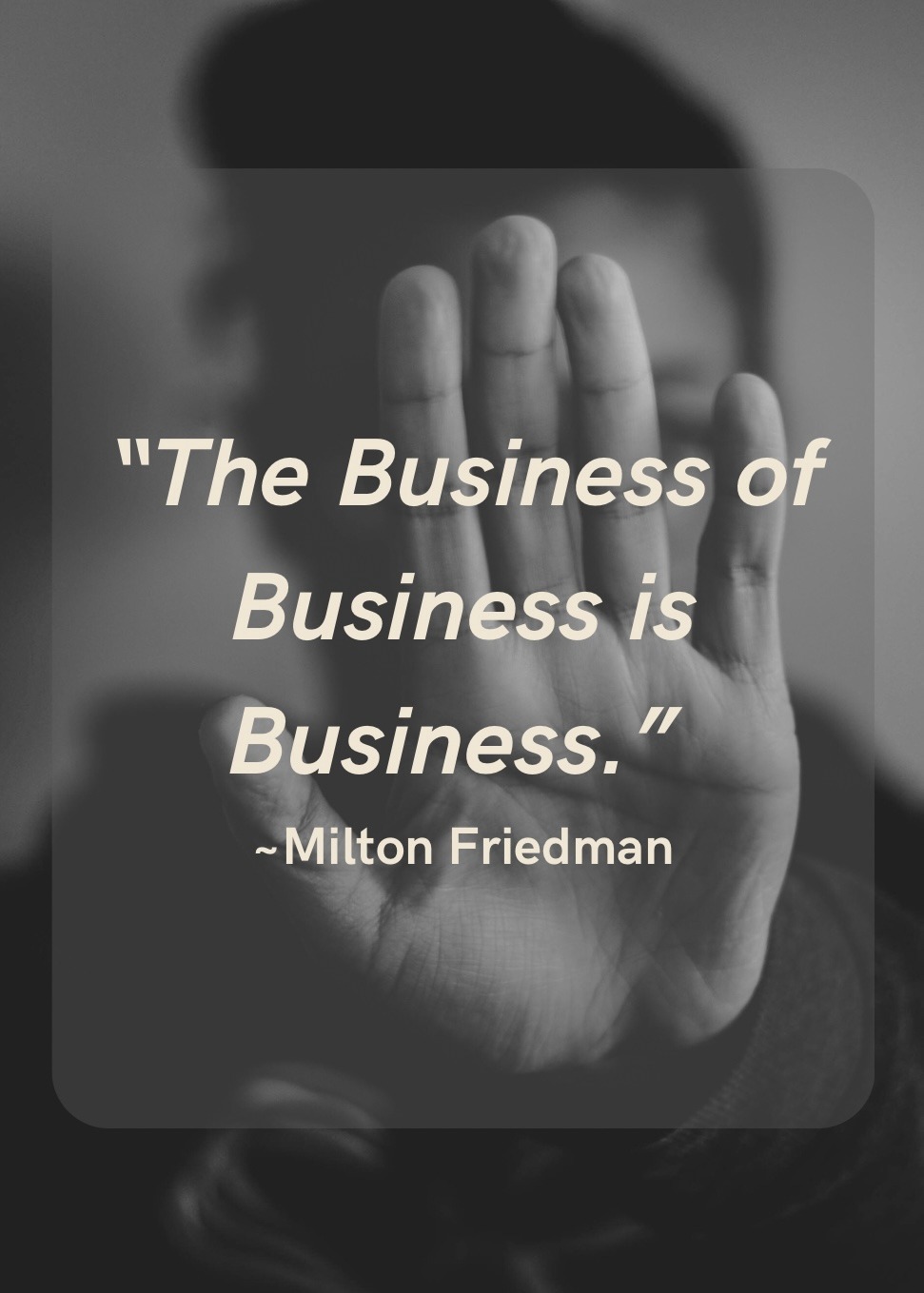
Milton Friedman drew a hard line: the business of business is business. Everything else – be it people, planet, or community – lived in the margins of philanthropy or PR.
It's a story that no longer fits the world we operate in.
When customers can see your supply chain, when employees choose employers by values, and when investors price sustainability into capital, doing good and doing well aren’t two separate conversations. They’re the same one, running on different time horizons.
The companies that understand this, like Unilever, Patagonia, Ørsted, or Salesforce, don’t just do good things. They grow stronger because of them.
Doing good is not altruism. It’s not charity either. It’s intelligent design.
Why The Old Story Doesn’t Work Anymore
Stewardship: The Dual Mandate
Stewardship is the twin mandate of modern leadership: to build economic performance and social value in the same motion. To manage the tension between the two as a source of strength, not compromise.
It’s a simple idea: if your success hurts the people or planet that support it, your success won’t last. But if your growth helps them, they’ll help you grow too.
Stewardship asks harder questions:
Can our growth improve the system we operate in, not exhaust it?
Can the way we hire, source, and sell create more capacity than it consumes?
Can success be measured not only by what we gain, but by what remains?
Those questions aren’t abstract. They sit in product decisions, pricing choices, hiring plans, and capital allocation. They shape how leaders trade speed for depth, and convenience for consequence.


Stewardship: The Dual Mandate
Stewardship is the twin mandate of modern leadership: to build economic performance and social value in the same motion. To manage the tension between the two as a source of strength, not compromise.
It’s a simple idea: if your success hurts the people or planet that support it, your success won’t last. But if your growth helps them, they’ll help you grow too.
Stewardship asks harder questions:
Can our growth improve the system we operate in, not exhaust it?
Can the way we hire, source, and sell create more capacity than it consumes?
Can success be measured not only by what we gain, but by what remains?
Those questions aren’t abstract. They sit in product decisions, pricing choices, hiring plans, and capital allocation. They shape how leaders trade speed for depth, and convenience for consequence.
What the Best Leaders Understand
Every company faces moments where “doing good” feels expensive.
Paying living wages.
Switching to cleaner energy.
Reducing waste.
Turning down a client that doesn’t fit your values.
In the short run, these moves carry a cost. But in the long run:
Customers stay.
Employees give more.
Investors worry less.
Each is earned in the present and paid back over time.
Leaders who understand this don’t ask if it’s worth it; they ask when it pays back.
Because they’ve learned that the line between ethics and economics is just time.
What the Best Leaders Understand
Every company faces moments where “doing good” feels expensive.
Paying living wages.
Switching to cleaner energy.
Reducing waste.
Turning down a client that doesn’t fit your values.
In the short run, these moves carry a cost. But in the long run:
Customers stay.
Employees give more.
Investors worry less.
Each is earned in the present and paid back over time.
Leaders who understand this don’t ask if it’s worth it; they ask when it pays back.
Because they’ve learned that the line between ethics and economics is just time.
Proof in the Real World
Over time, stewardship always pays back.
Customers trust you more, and trust moves demand. Recent research from Marketreach and WARC found that 59% of consumers say trust plays a vital role in deciding what to buy, and 74% will spend more with brands they trust. That’s not just sentiment; it’s reflected directly in spend. In Unilever’s portfolio, for instance, the purpose-led brands grew 69% faster than the rest and drove three-quarters of company growth in 2018. That is growth tied to credibility, not campaigns.
Employees stay longer and perform better. Gallup’s meta-analyses link higher engagement to stronger business outcomes across industries, including higher productivity and profitability and lower turnover. Teams that are engaged recover faster and execute better.
Investors worry less when long-horizon risks are priced in. A review of ~2,200 studies finds about 90% show a non-negative relationship between ESG and financial performance, with most showing a positive link. Markets are rewarding firms that manage consequence, not ignoring it.
And the whole business becomes harder to break. When companies align growth with future realities, they open new categories and reduce fragility. Ørsted’s decade-long pivot from fossil to renewables did not just lower risk, it helped create a category leader.
That is the pattern: near-term friction, long-term value compounding. Not charity. Design.


The Long Clock
The hardest part of stewardship isn’t belief; it’s patience.
Markets move faster than purpose.
The quarterly clock rewards efficiency; the human clock rewards endurance.
Stewardship is running both by design.
It’s the leader who protects a culture’s integrity while scaling.
It’s also the leader that rewards speed, when it leads to value.
It’s the product team that builds for repair, not obsolescence.
The investor who values the unseen assets of trust and learning.
Measured in months, those choices look costly.
Measured in years, they define greatness.


The Long Clock
The hardest part of stewardship isn’t belief; it’s patience.
Markets move faster than purpose.
The quarterly clock rewards efficiency; the human clock rewards endurance.
Stewardship is running both by design.
It’s the leader who protects a culture’s integrity while scaling.
It’s also the leader that rewards speed, when it leads to value.
It’s the product team that builds for repair, not obsolescence.
The investor who values the unseen assets of trust and learning.
Measured in months, those choices look costly.
Measured in years, they define greatness.
What Endures
Impact shows why a company matters.
Value shows what it creates.
Capability shows how it delivers.
Stewardship ensures it all lasts.
It’s what keeps good growth good.
The discipline that aligns ambition with consequence.
The long view that turns doing good into doing well.
Because in the end, the companies that learn to run both clocks in tandem don’t just grow.
They endure. And endurance is the highest form of performance.
What Endures
Impact shows why a company matters. Value shows what it creates. Capability shows how it delivers. Stewardship ensures it all lasts.
It’s what keeps good growth good.
The discipline that aligns ambition with consequence.
The long view that turns doing good into doing well.
Because in the end, the companies that learn to run both clocks in tandem don’t just grow. They endure. And endurance is the highest form of performance.
Ready to Make an Impact?
Reading is a start. Acting on it is better. If these ideas resonate, let’s turn them into something real for your team, your business, or your next chapter. Let's not just think differently, but build differently.


Stay in the Loop
© 2025 The Impact CMO. All rights reserved.